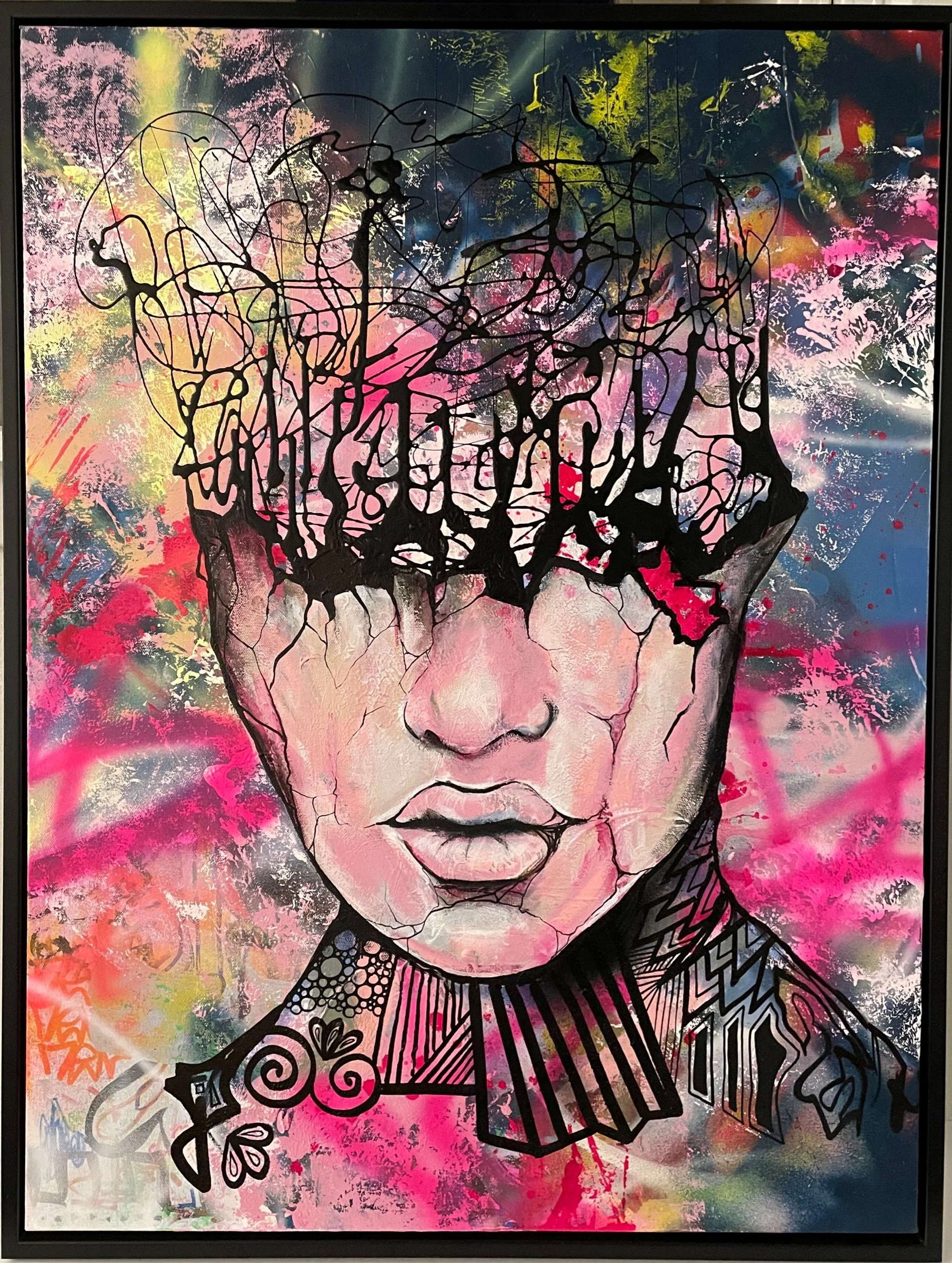
LOTUS
LOTUS
ELEMENT · WATER
Water does not resist change. It moves through it.
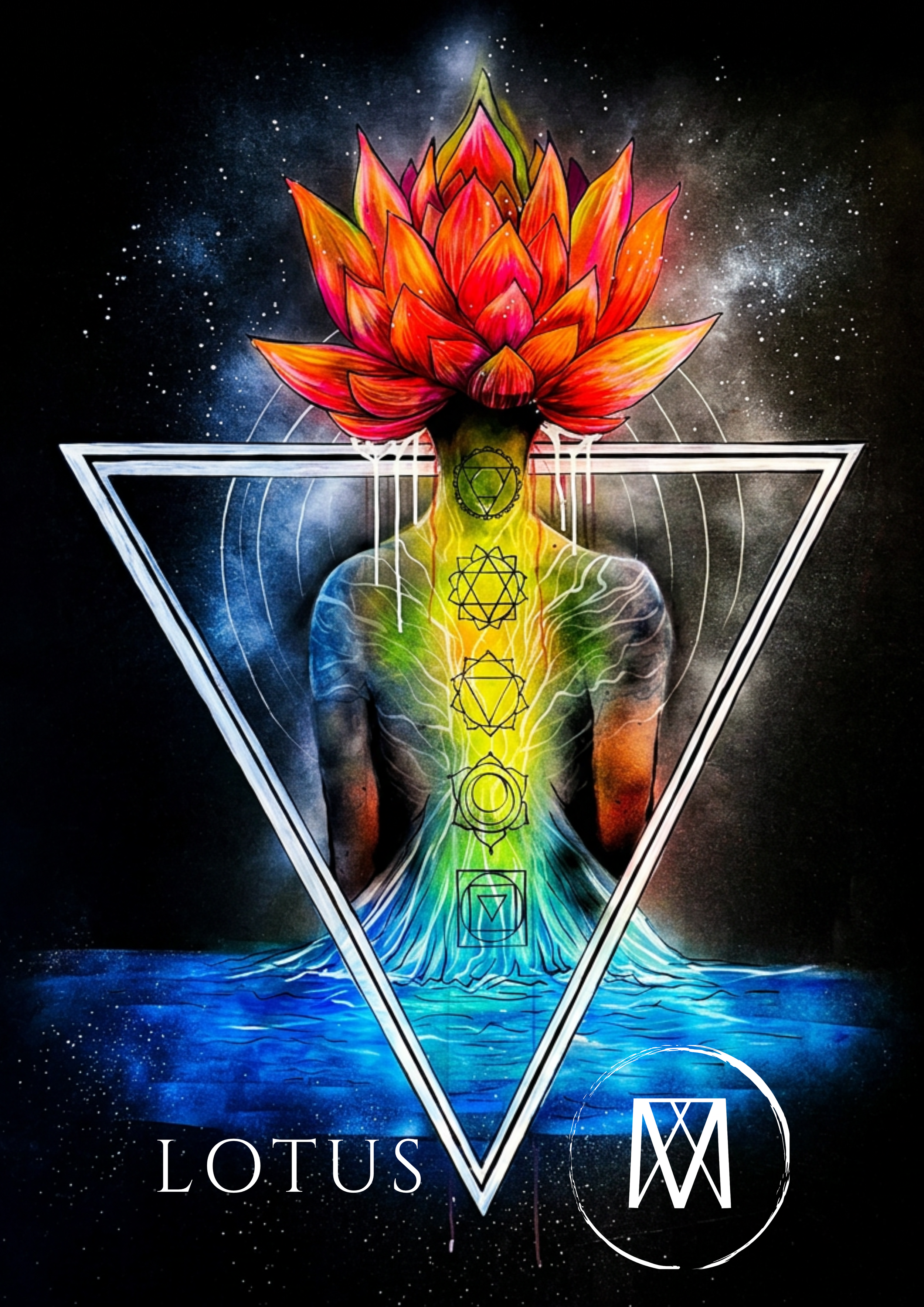
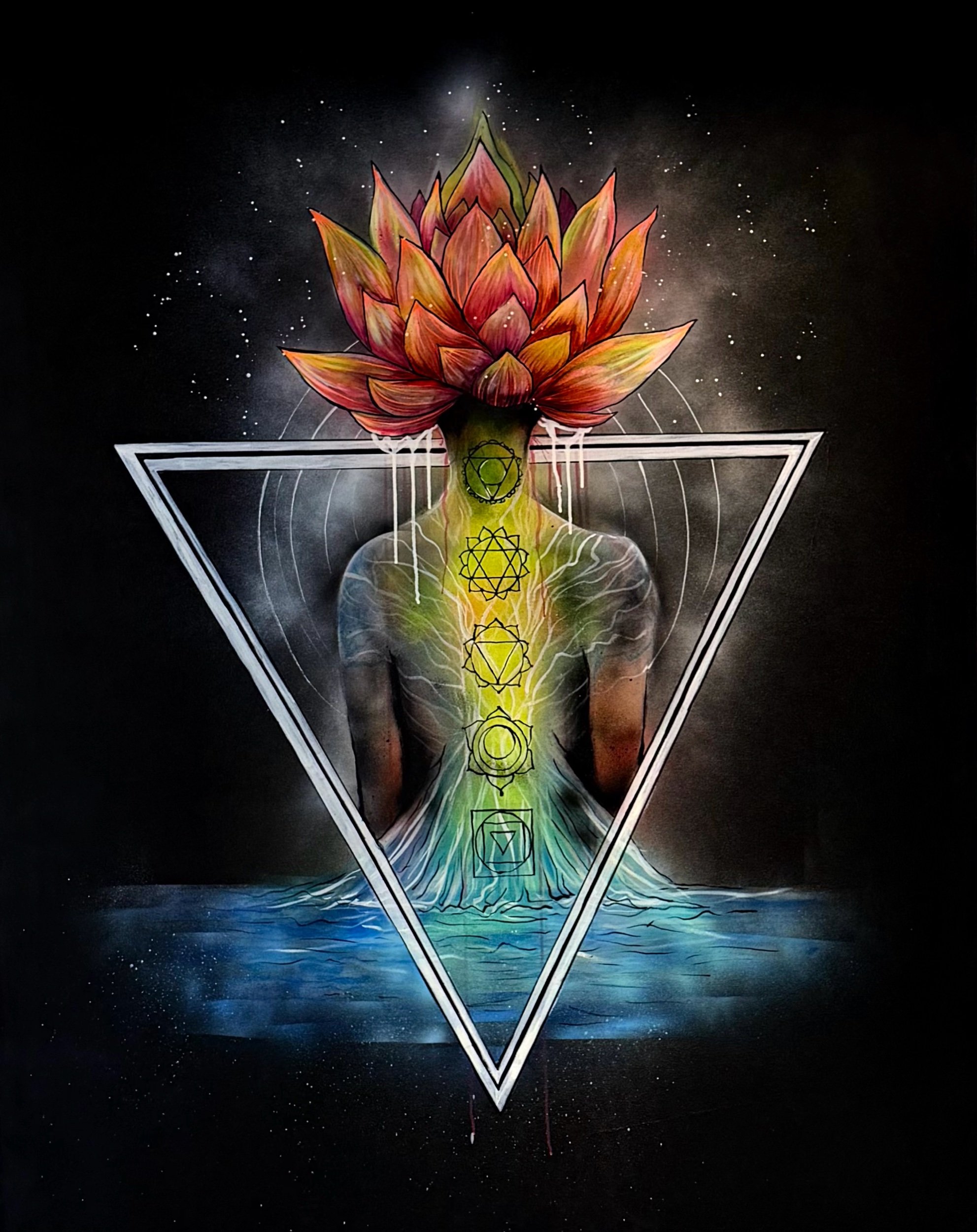
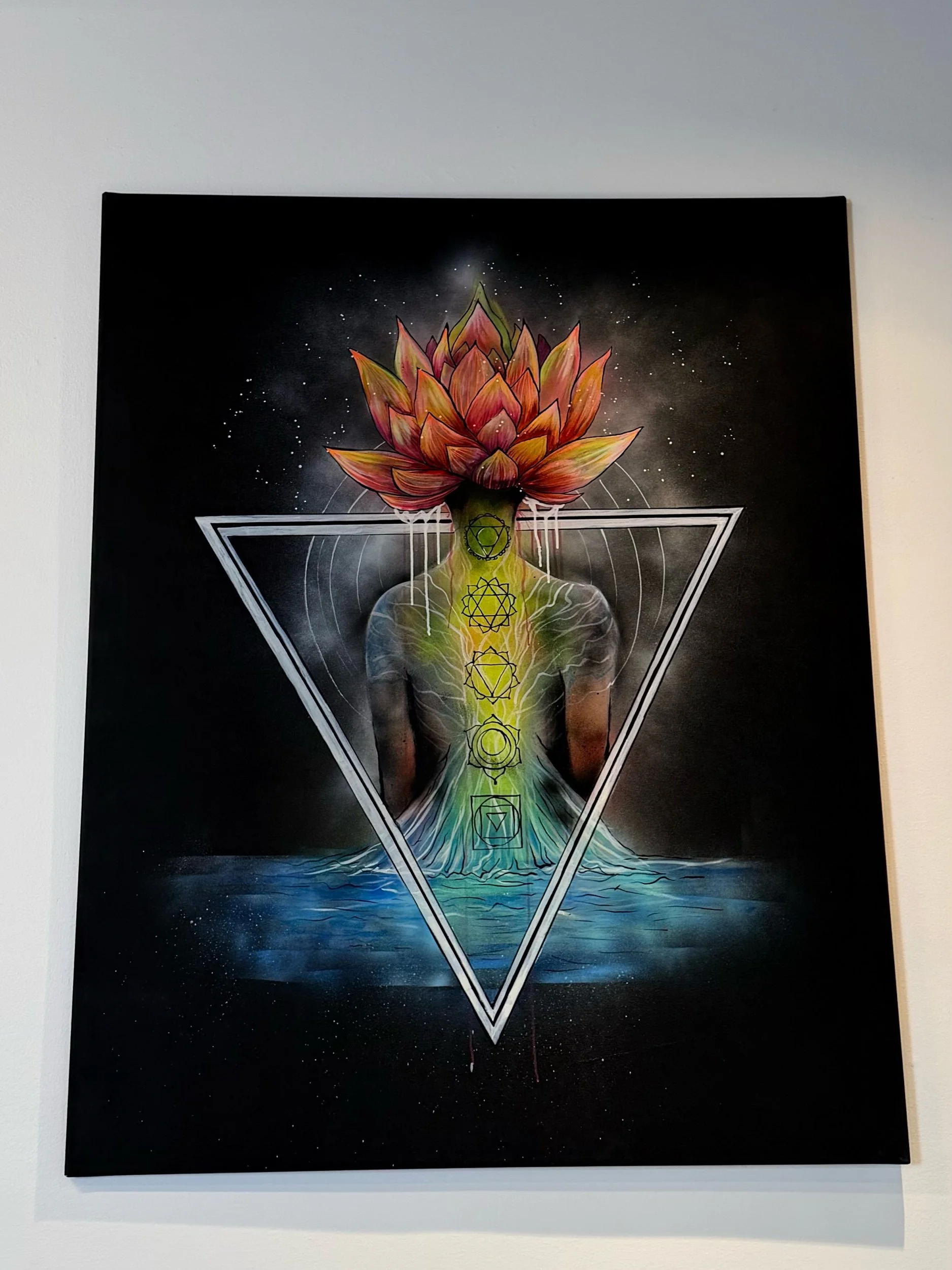
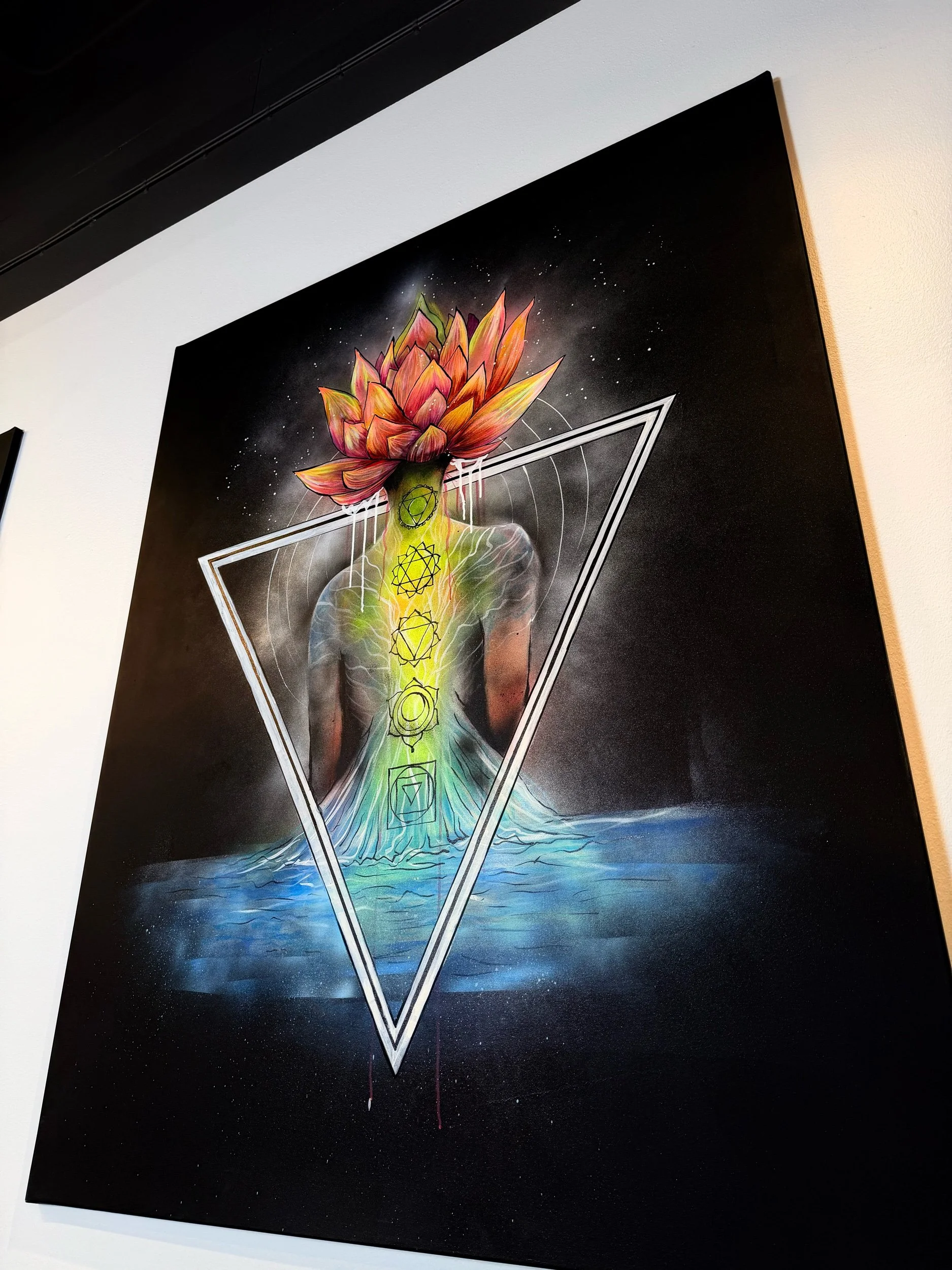
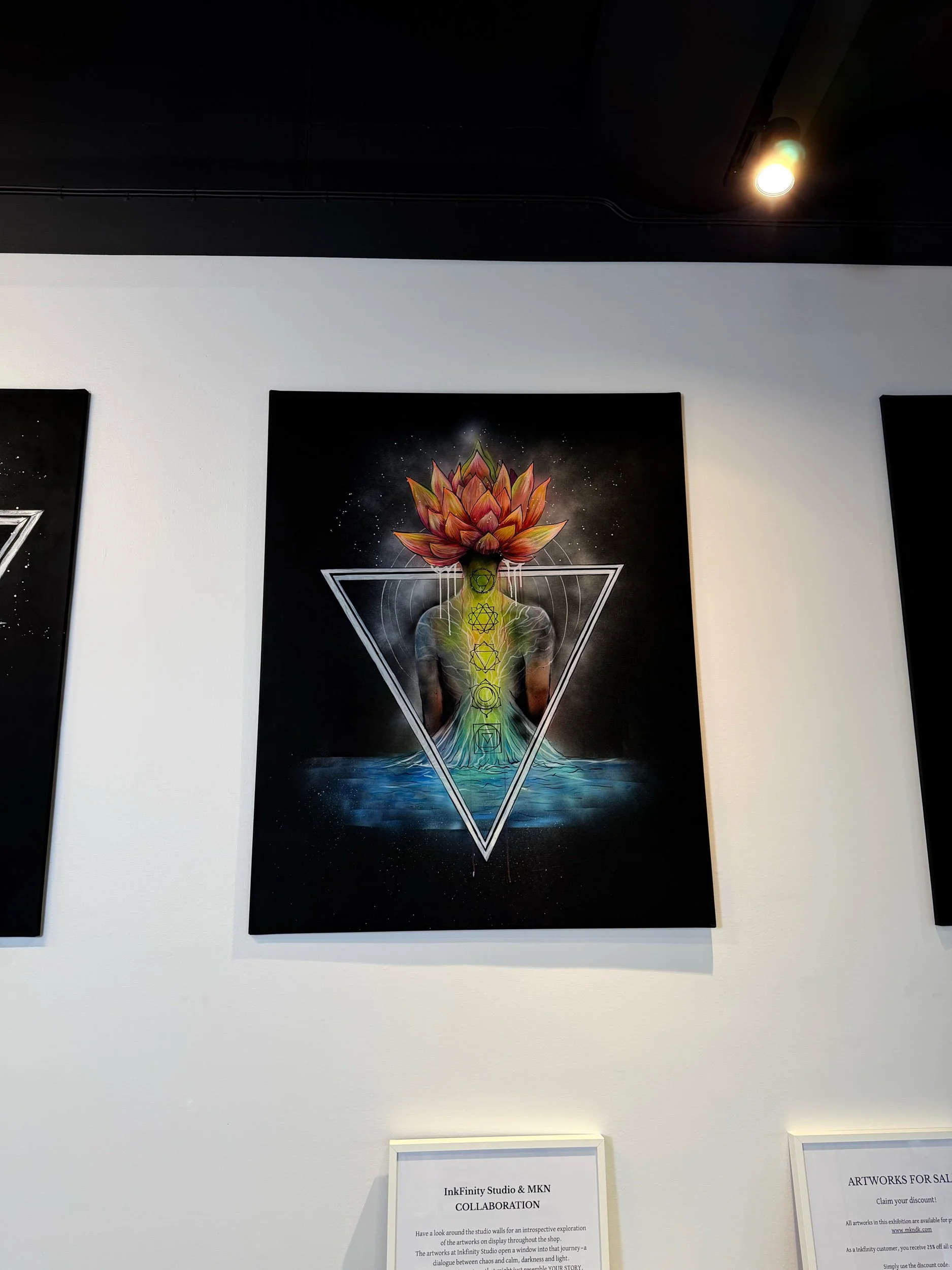
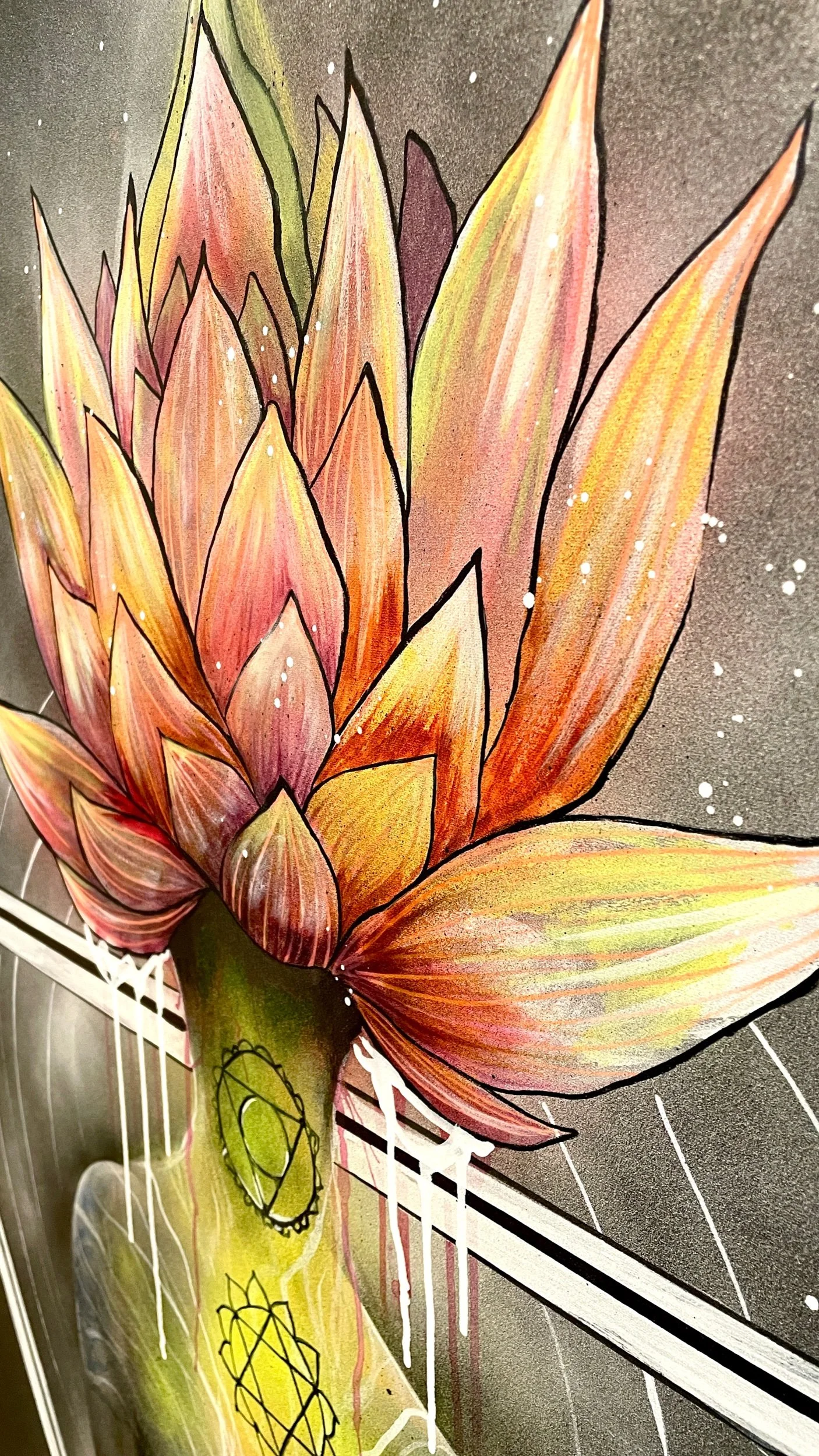
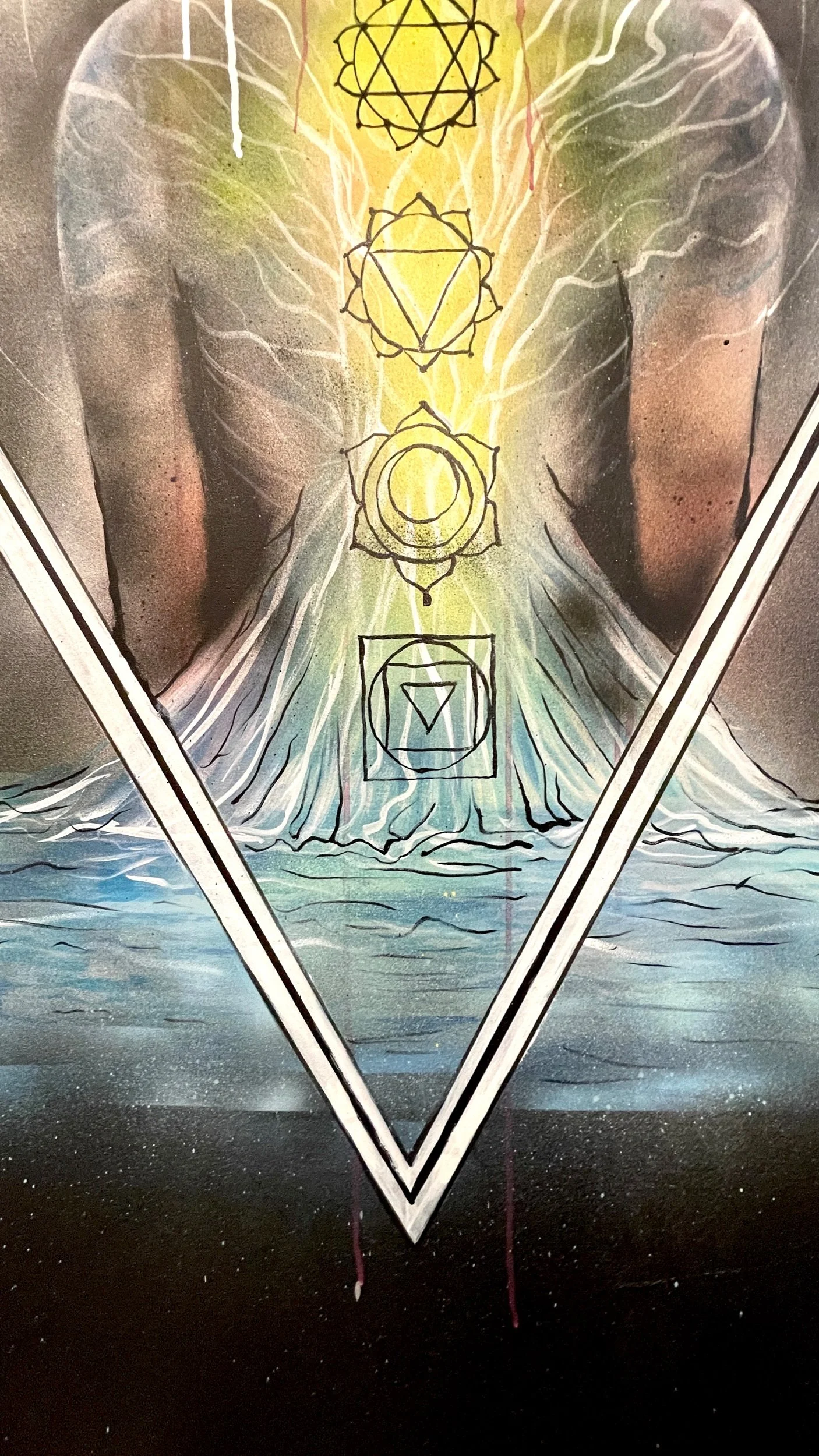
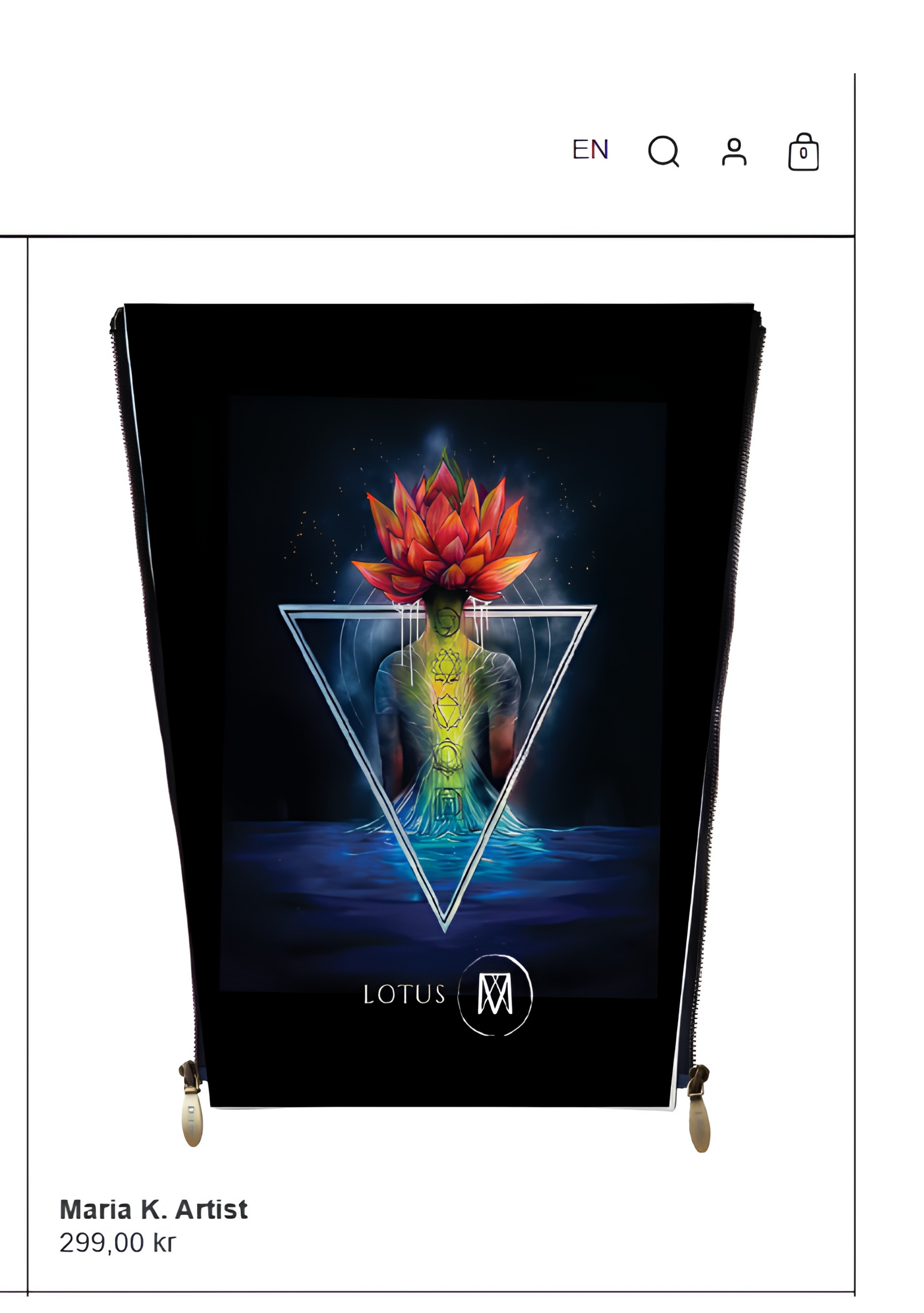
Lotus explores Water as surrender, transformation and quiet strength. The female figure is held within a downward-pointing triangle — the traditional alchemical symbol for Water — while her body gradually dissolves into the element beneath her.
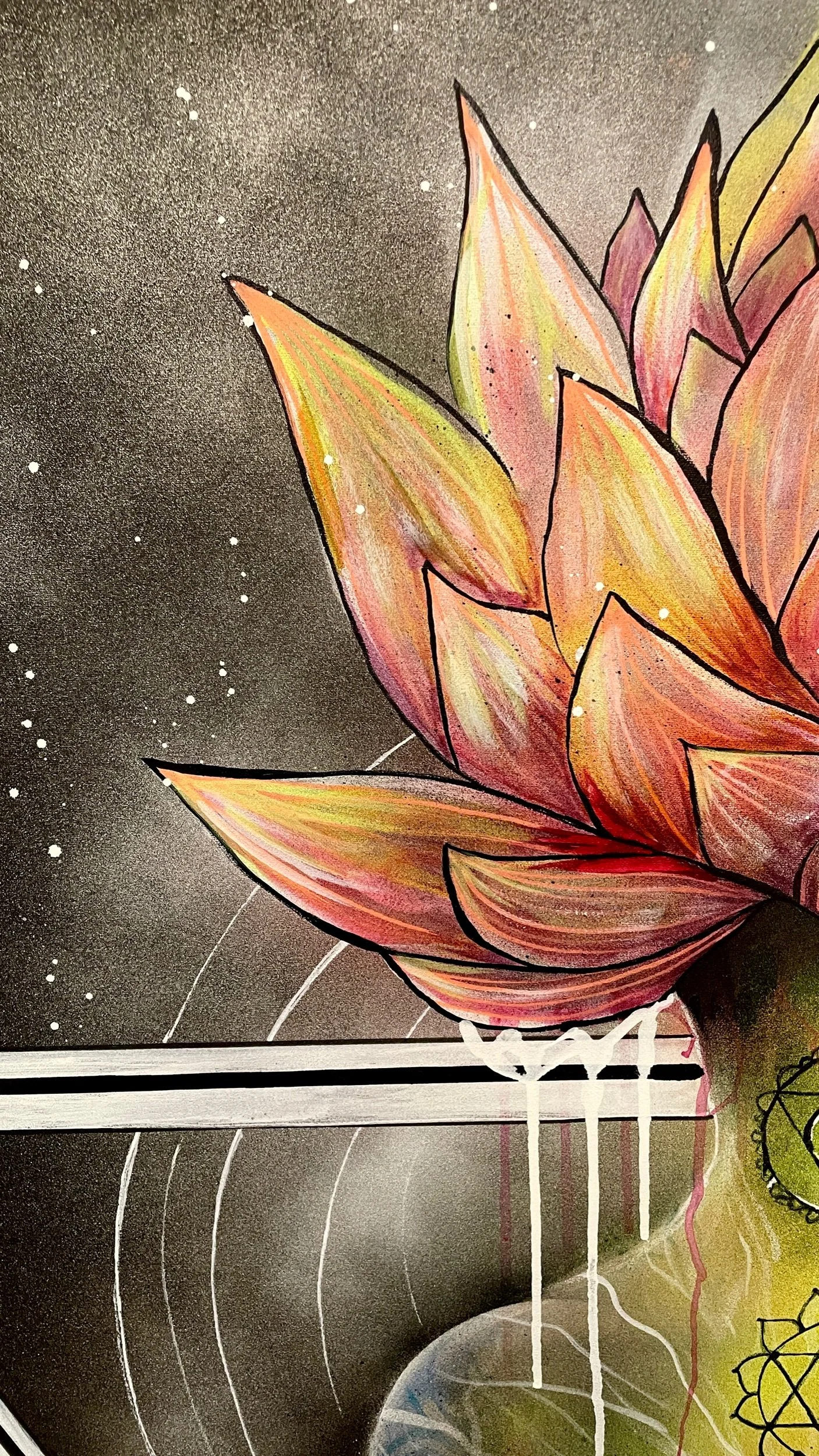
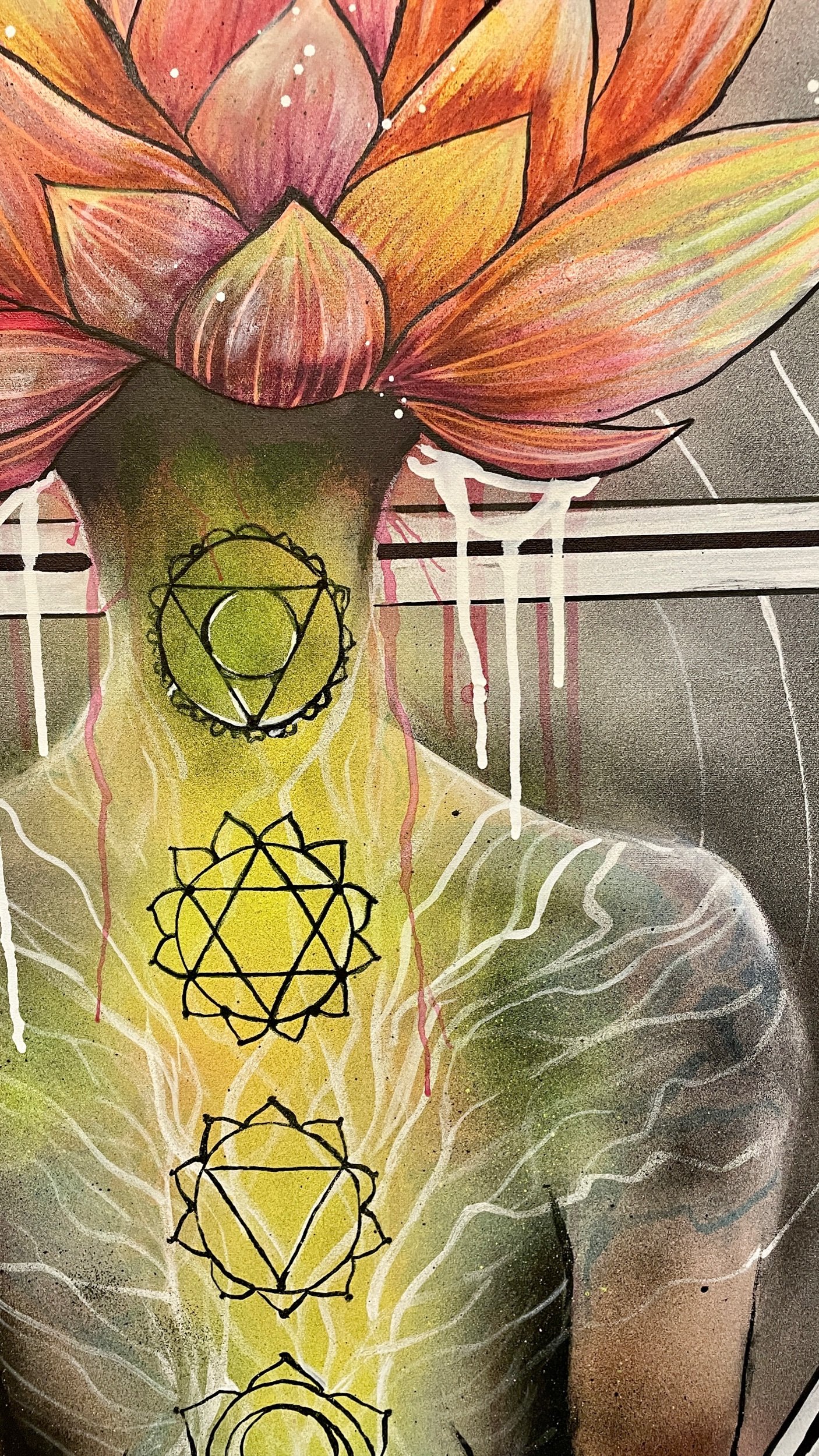
Her head becomes a lotus flower, a symbol of resilience and renewal: rooted in muddy water, yet rising above the surface to bloom. Along her body, the chakra symbols form a vertical current, suggesting energy flowing, connecting and shifting through her like water itself.
At the base of the painting, the distinction between body, dress and water begins to disappear. She is no longer simply surrounded by the element — she becomes part of it.
For me, Water became about trusting transformation rather than resisting it — allowing ourselves to move with what changes us.
Acrylics, spray paint and ink on canvas
120 × 150 × 2 cm
Original artwork · MKN
View this artwork at InkFinity Studio
WEAR THE ART
Lotus is also available as an art patch for the I Am DIP Jacket - taking the artwork beyond the canvas and making it a part of your own expression.